Column · @codygkji780
How a Gin Bar Balances Innovation and Tradition
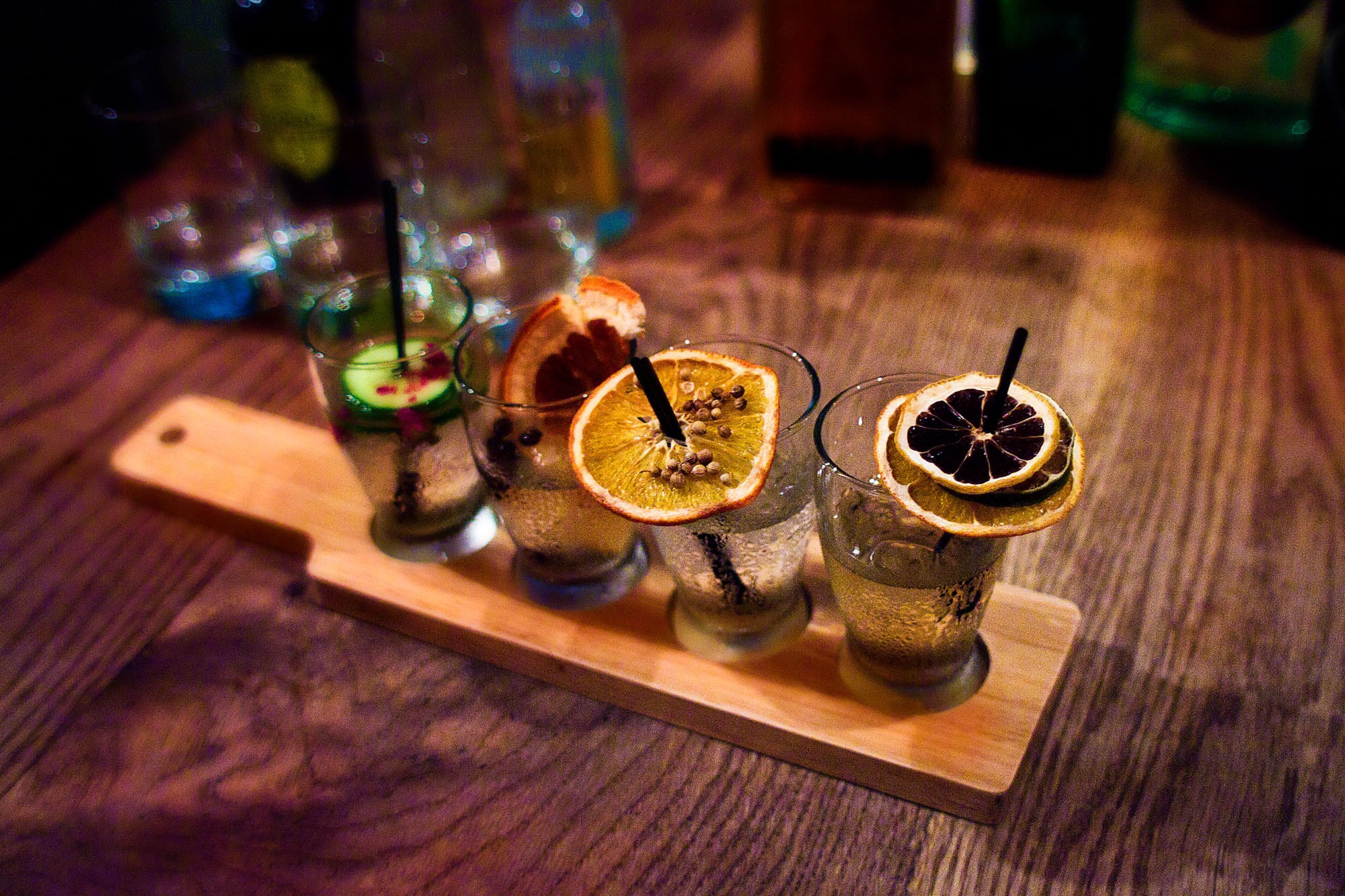
A good Gin Bar lives in a productive tension. Guests arrive with two very different hopes. Some want the familiar reassurance of a cold martini, a properly built negroni, or a gin and tonic that tastes clean, bright, and exactly as remembered. Others want surprise. They are scanning the back bar for distilleries they have never heard of, asking about local botanicals, or hoping the menu includes something savory, saline, smoked, clarified, or fermented.
That tension is not a problem to solve. It is the point of the category.
Gin, perhaps more than any other spirit, invites both reverence and experimentation. It has centuries of history behind it, but its flavor profile is unusually elastic. Juniper is the anchor, yet around that anchor there is room for citrus peel, roots, seeds, herbs, flowers, tea, seaweed, pepper, olive leaf, Douglas fir, lavender, orris, cucumber, and ingredients that would have sounded absurd in a London dry recipe fifty years ago. A serious gin program has to respect the structure of the spirit while staying curious about its possibilities.
The bars that do this well rarely announce it in grand terms. You feel it instead. The room has confidence without stiffness. The drinks list has one or two surprises, not twelve acts of liquid theater. The bartender can discuss a classic Martinez with precision, then recommend a contemporary gin from a small producer using local botanicals, without making either choice feel more virtuous than the other.
That balance takes more discipline than many guests realize.
The foundation has to be classical
Before a Gin Bar can innovate credibly, it has to get the basics right. This sounds obvious, but it is where many concept-driven bars stumble. They chase novelty in the menu while neglecting the less glamorous work of consistency. Ice quality varies. Vermouth oxidizes. Garnishes are decorative rather than functional. A martini arrives too warm, too diluted, or perfumed with an inappropriate twist. At that point, all the modern touches in the world cannot rescue the program.
Tradition, in practical bar terms, means standards. It means understanding what makes a classic drink durable. The martini has survived not because it is old, but because it is structurally elegant. The negroni persists because equal parts deliver tension between bitterness, sweetness, and botanicals with remarkable economy. The gin fizz works because texture matters as much as flavor. A Tom Collins succeeds or fails on dilution, acidity, carbonation, and temperature more than on clever branding.
A bar team needs to know these drinks deeply enough to recognize where there is room to play and where there is not. That knowledge is usually tactile, not theoretical. It comes from tasting side by side. Stirring three martinis to slightly different dilutions and noting how the gin opens or collapses. Trying the same negroni with a robust juniper-led London dry, then with a softer contemporary gin, then with an old tom, and seeing how the bitter and sweet components shift. Serving a gin and tonic in different glassware, with different cubes, and watching how long it stays in balance.
The best innovation often begins in those small acts of comparison.
Gin is unusually suited to evolution
There is a reason bartenders and operators keep returning to gin when they want to refresh a menu without losing seriousness. Gin can absorb creative direction while still remaining recognizable. Rum and whiskey carry strong expectations from cask, origin, and style. Vodka is intentionally neutral. Tequila and mezcal come with their own deep traditions and production identities. Gin, by contrast, has a broad house with many rooms.
Within one back bar, you might have a piney London dry, a floral contemporary bottling, a navy strength expression with real heat and backbone, an old tom with gentle sweetness, a barrel-rested gin, and a regional bottle leaning on ingredients that speak to place. This diversity gives a Gin Bar an unusually wide operating range.
That range creates opportunity, but it also creates noise. If every bottle claims distinction and every drink aims to surprise, the guest loses the thread. Innovation works best when it has boundaries. The bar needs a point of view.
Sometimes that point of view is geographic. A bar may focus on British tradition while featuring newer producers from Japan, Spain, Australia, and the United States. Sometimes it is sensory. A program might organize itself around juniper-forward, citrus-led, savory, and floral profiles so guests can navigate more intuitively. Sometimes the point of view is service-based. The classics Gin Bar remain fixed and reliable, while seasonal experimentation happens on a smaller section of the menu.
What matters is coherence. The guest should feel that the unusual drink on the menu belongs in the same establishment as the chilled-down, textbook martini.
Innovation is not garnish, smoke, or spectacle
There is a persistent misunderstanding in the trade that innovation must be visible. A drink arrives under a cloche, with a sculptural garnish, color change, edible paper, atomized essence, or some other sign that effort has occurred. Sometimes those techniques are valuable. Often they are cover for weak thinking.
In a Gin Bar, the most meaningful innovation is usually structural. It shows up in how the gin is selected, how a classic ratio is adjusted to suit a specific botanical profile, how house acidity is handled, or how a secondary ingredient reframes juniper instead of burying it.
A bartender might discover that a saline solution makes a citrus-and-herb gin taste more complete in a highball. Another might split the base of a martini between a dry gin and a small measure of a softer, more aromatic gin to create width without sacrificing line. A bar might use a lightly fortified aperitif instead of dry vermouth in a seasonal serve because it highlights green notes in a local gin. None of that is loud, but all of it is innovative.
The same goes for nonalcoholic development. Guests increasingly want lower-proof or no-proof options that carry the same seriousness as the rest of the menu. In a gin-focused setting, that can be challenging because traditional gin’s identity is so bound to alcohol as a flavor carrier. A thoughtful bar does not respond by serving a sugary stand-in with a lot of rosemary. It builds drinks with bitterness, aroma, texture, and length, so the experience still feels adult and integrated with the house style.
This kind of innovation requires restraint. It asks a simple question: does the change improve the drink, or merely make it different?
Tradition lives in service as much as recipe
People often talk about tradition as if it resides only in old bottles and classic specs. In reality, much of it lives in service behavior. A guest’s sense that a bar takes gin seriously is shaped by a hundred small decisions.
Temperature is one of them. A martini that reaches the table properly cold tells the guest something immediate about standards. So does a tonic served with carbonation intact rather than poured lazily over wet, collapsing ice. Glassware matters, not because stemware is theatrical, but because shape influences aroma, temperature retention, and pace. Garnish matters when it is selected for aromatic contribution rather than visual clutter. A wide lemon peel over a juniper-heavy gin does one job. A grapefruit expression over a softer, floral gin does another. Cucumber can be lovely, but it can also flatten a drink if used indiscriminately.
There is also the tradition of conversation. In a strong Gin Bar, staff do not recite tasting notes like a script. They guide. They ask whether the guest wants something drier, more citrus-led, more savory, more classic, or more adventurous. They know when to explain and when to leave the guest alone. They can recommend a bottle without making the customer feel ignorant. This matters because gin attracts both enthusiasts and occasional drinkers, often sitting side by side.
Service is where tradition becomes hospitality instead of nostalgia.
The back bar tells guests what the house believes
A gin-heavy back bar can easily become a museum of impulse purchases. Bottles accumulate because they are new, rare, local, highly rated, or beautifully packaged. The result is abundance without clarity. Staff struggle to remember distinctions, inventory Gin Bar gets tied up in slow movers, and guests face a wall of labels with no obvious path through it.
Thoughtful curation is where innovation and tradition meet operational reality. A bar does not need 250 gins to show seriousness. In many cases, 40 to 80 carefully chosen bottles, supported by real staff knowledge, will outperform a larger collection. The exact number depends on the concept, volume, and market, but the principle holds.
A balanced program usually includes traditional benchmarks because they create reference points. If a guest cannot order a reliable London dry in a serious Gin Bar, the house is making things harder than they need to be. Alongside those anchors, the bar can feature modern styles that justify their place, whether through regional character, production method, or distinct botanical expression.
One useful discipline is to ask of every bottle: what conversation does this add? If the answer is vague, the bottle may be redundant. Many bars carry five or six gins that perform essentially the same role in service. That is not curation, it is drift.
The strongest bars also revisit their range more often than guests realize. They taste through stale assumptions. A gin that seemed exciting two years ago may now feel generic because the market has moved. Another that sold poorly in one format may excel in another. A bottle that underwhelms in a G and T may become excellent in a martini variation or a long aperitif serve. Innovation sometimes comes less from buying something new than from rethinking how an existing spirit is used.
Menus need both anchors and doors
Menu design is one of the clearest places where balance can either thrive or fall apart. If every drink is a riff, guests who want familiarity feel alienated. If every drink is canonical, curious drinkers get bored. The trick is to create both anchors and doors.
Anchors are drinks that reassure. They tell the guest that the bar respects the canon and can execute it. A martini, negroni, gin and tonic, and one or two other touchstones often do this job well. Doors are drinks that invite exploration. They take the guest somewhere new, but through a route that still feels intelligible.
A menu might feature a bright seasonal highball built on a coastal gin, dry vermouth, preserved citrus, and tonic. That is new, but legible. It might offer a savory martini variation with olive leaf distillate or a Gibson with a carefully made pickled garnish. It might reinterpret a bramble using a less sugary fruit component, or build a sour around herbal notes that pull more directly from the gin itself.
The wording matters too. Menus overloaded with obscure process language can intimidate guests and flatten the human side of service. On the other hand, a menu that says nothing beyond whimsical drink names leaves staff doing all the explanatory labor. Good menu writing gives enough information to orient the guest without turning the page into technical documentation.
One of the smartest approaches I have seen is to frame a small number of seasonal drinks through the classic they descend from. That simple cue helps guests understand the intention. It says, in effect, this may be new, but it is not random.
Seasonality can refresh a gin program without distorting it
Seasonality is one of the most practical ways a Gin Bar stays alive. It gives the team reasons to revisit ingredients, alter textures, and shift aromatic emphasis. But gin seasonality is not as straightforward as changing syrups and garnishes.
In warm weather, bars often lean too hard into brightness and produce a menu full of citrus-on-citrus drinks that start to taste interchangeable. In colder months, they overcorrect toward spice, smoke, and barrel influence until gin’s identity is blurred. The better approach is to let the season affect supporting elements while keeping the spirit’s shape visible.
In spring, that may mean fresher green notes, softer floral accents, and leaner aperitif styles rather than sweetness. In summer, longer drinks, sharper temperature contrast, and careful control of carbonation. In autumn, orchard fruit used with restraint, plus savory herbs or teas that complement juniper. In winter, richer textures, deeper bitters, and stronger proof choices that can carry through dilution and chill.
A well-run bar will also think seasonally about garnish and prep labor. There is little romance in a beautiful menu that requires an unsustainable amount of handwork on a busy Friday. Innovative bars learn this lesson quickly. A garnish that takes forty-five seconds too long to execute is not just an aesthetic choice, it is a service bottleneck.
Staff education is where the balancing act becomes real
No concept survives poor translation to the floor. A bar can have a brilliant philosophy, an excellent bottle selection, and an intelligent menu, but if the team cannot carry that vision into service, guests will experience confusion rather than balance.
Training in a Gin Bar should include flavor memory, not just product facts. Staff need to know how juniper presents differently across styles, what coriander contributes, why angelica matters, how citrus botanicals differ from fresh citrus in the glass, and how tonic choice changes a serve. They should understand why one gin disappears in a negroni while another dominates it. They should also know the classics well enough to describe them plainly.
This is not about turning bartenders into lecturers. It is about confidence under pressure. During a busy service, a guest rarely asks for a detailed seminar. More often, they ask a short question with a hidden decision inside it: “I usually drink Hendrick’s, what else would I like?” Or, “I want something clean, not too floral.” Or, “Can you make me a martini that still tastes like gin?”
The bartender’s answer depends on pattern recognition. It depends on having tasted enough and listened enough to translate preference quickly. That skill is trained.
One of the most effective exercises I have seen in bar teams is comparative tasting across one format. Take three or four gins and build the same drink with each, perhaps a martini at one fixed ratio, or a simple gin and tonic with one tonic and one garnish. Taste them cold and side by side. The discussion that follows is far more useful than memorizing a distributor sheet.
Guests want ritual, but they also want discovery
Part of the appeal of a Gin Bar is ritual. There is pleasure in the polished mixing glass, the cold stem, the expressed peel, the measured bitterness of a negroni before dinner. Ritual creates continuity. It tells the guest they have entered a place with standards and memory.
Yet guests also come for discovery, even when they do not say so explicitly. Discovery might mean trying a Japanese gin built around yuzu and sansho, or a regional bottle using botanicals foraged close to the distillery. It might mean learning that a martini can be tailored with much finer adjustment than they realized. It might mean tasting a tonic that is drier, gentler, or more bitter than supermarket norms and suddenly understanding why their usual gin and tonic always felt clumsy.
The challenge is that discovery can threaten ritual if handled clumsily. Nobody wants to feel corrected while ordering a favorite drink. A guest who asks for a standard G and T is not necessarily asking for education. Bars that balance innovation and tradition know how to read that distinction. They offer discovery, they do not impose it.
That is one reason tone matters so much in service. Enthusiasm is welcome. Snobbery is fatal.
The room itself should support the idea
Even physical design reflects the balance between old and new. A Gin Bar does not need to look Victorian to feel rooted, nor does it need stripped concrete and laboratory glassware to look contemporary. What matters is whether the room supports the pace and mood of the drinks.
Gin often performs best in spaces that allow for conversation, attention, and some degree of visual calm. This does not require luxury. It requires intention. Lighting that flatters glassware and color. Enough bar space for proper service. Storage that keeps bottles organized and visible without making the back bar a trophy case. Comfortable seating that encourages a second drink rather than a rushed departure.
Music matters too. So does noise level. The guest deciding between a fifty-pound bottle pour and a simple house G and T should feel equally accommodated. That is easier in a room that communicates confidence rather than trend anxiety.
Profit can distort the program if nobody watches it
The least glamorous part of the balance is financial. Gin bars have to manage margin, waste, inventory, and guest expectations like any other business. Sometimes the pressure to increase spend pushes bars toward innovation for the wrong reasons. A complicated signature cocktail can command a higher price than a classic, but it also brings extra prep, more training risk, and often slower service. Rare bottles create prestige, but they tie up cash and may sit untouched if the staff cannot sell them naturally.
Tradition, operationally, is often more profitable than people assume. Classics move. A guest who trusts the bar’s martini is more likely to order a second drink, perhaps something exploratory. A reliable gin and tonic program can deliver excellent returns when tonic quality, garnish discipline, and pour cost are managed properly.
The real commercial sweet spot is not maximal novelty. It is a structure where dependable classics fund measured experimentation. That lets the bar stay fresh without betting the business on every new idea.
Some of the best operators quietly use a simple internal test before adding a new drink or bottle. They ask whether it improves one of three things: guest experience, brand identity, or economics. Ideally all three. If it hits only one, it needs scrutiny. That kind of judgment is what separates a mature Gin Bar from one that is merely enthusiastic.
What the best gin bars understand
At their best, gin bars are not torn between innovation and tradition. They use each to sharpen the other. Tradition gives the bar credibility, language, and craft standards. Innovation keeps it from becoming a museum piece. The guest may only register the result as a feeling, that this place seems both trustworthy and alive, but that feeling is hard won.
A serious Gin Bar knows that juniper still matters. So do dilution, temperature, citrus oil, vermouth freshness, tonic quality, and classic technique. It also knows that the category is one of the most flexible in modern drinking culture, capable of absorbing local identity, seasonal thinking, low-proof development, and new flavor architecture without losing itself.
That balance is not maintained by trends. It is maintained by choices, repeated nightly. Which bottles earn a place. Which drinks stay on the menu. How much explanation a guest needs. When to honor the original and when to adapt it. When to simplify. When to push.
If a bar gets enough of those choices right, it does something rare. It turns gin from a spirit category into a house style, one where heritage is not a constraint and novelty is not an end in itself. That is when a Gin Bar becomes memorable, not because it chose tradition over innovation or innovation over tradition, but because it understood the value of both.
The Winslow
243 E 14th St
New York, NY 10003, United States
Phone: +1 212-777-7717
FAQ About Gin Bar
How to do a gin tasting?
Start with a small pour and gently smell the gin before taking a small sip. Notice its juniper, citrus, floral or spice notes, then compare how the flavor changes with a little water or tonic. At a gin bar, ask the bartender to explain the selection and botanical pairings.
How to make the best tasting gin and tonic?
Use chilled gin, fresh tonic and plenty of ice. A common starting ratio is one part gin to two parts tonic, adjusted to taste. Choose a garnish that complements the gin's botanicals and stir gently to preserve the bubbles.
What is the smoothest tasting gin?
There is no single smoothest gin for everyone. Perceived smoothness depends on the botanical recipe, alcohol strength, serving temperature and mixer. Describe whether you prefer citrus, floral, herbal or juniper-forward flavors so a bartender can suggest a suitable style.